
G+D Netcetera manages 1.4 billion tokens
Payment tokenization as prerequisite in e-commerce


No card numbers. No passwords. No repeated data entry. All payment cards and address details live in Click to Pay profiles.
The shopper selects a card and they are done. One tap, one click, one purchase completed.
The checkout recognizes returning customers automatically, on any device and browser. Saved cards appear instantly.
There is nothing to type and nothing to remember. The intelligence is invisible, exactly how it should be.
Click to Pay transactions use payment tokens, not the real card numbers. The merchant does not see any actual card data.
The issuer's risk systems receive additional assurance data from the SRC System, making the transaction look safer — and approve it more often. Security that improves conversion is security done right.

Over 71% of online cart abandonments are driven by convenience and security concerns. Customers leave when checkout is hard. Click to Pay makes checkout the easiest part of shopping, no manual entry, no account creation, no forgotten passwords. Completed purchases go up. Revenue follows.

CtP transactions carry tokenization and additional assurance data from the SRC System, so issuer risk systems treat them as lower risk. For a PSP processing meaningful volume, 4% in approval rates, as reported by one of the mayor card networks, is a percentage that translate directly into revenue previously lost to unnecessary declines.

G+D Netcetera’s Click to Pay SRCI delivers full integration in 6 to 12 weeks, end to end, all networks covered. Your team goes live faster. Your merchants go live faster. Your technical team is free from certification processes.
G+D Netcetera’s solution includes the server-side SRCI component and the JavaScript SDK for browser-based integration.
Together they handle the full Click to Pay flow: device recognition, card display, consumer interaction, and token-based payment completion. Available as SaaS on G+D Netcetera's cloud payment platform.
Skip 3DS entirely and authenticate with a biometric passkey instead, Face ID or fingerprint, and done.
The challenge step disappears, the customer stays in the checkout flow, and the transaction moves straight to authorization. Faster for the shopper, fewer drop-offs for you. The one-click promise, fully delivered.
Out-of-the-box connectivity to the SRC Systems of all supported card networks: Visa, Mastercard, AmEx, eftpos, and Cartes Bancaire (CB).
Instant access to the latest scheme capabilities across all networks, delivered as a consistent checkout experience regardless of which card the shopper reaches for. New scheme features go live automatically, no re-integration required.
The Click to Pay SRCI has been reviewed and certified by all supporting schemes.
PSPs and merchants going with G+D Netcetera do not need to go through that review themselves. The output would be the same and going direct adds months and internal resource cost. With G+D Netcetera, you start with a certified, production-tested solution.
Shoppers enroll at any participating merchant checkout by selecting a card.
If the card issuer has Click to Pay push provisioning in their banking app, enrollment happens there — before the customer ever reaches a merchant. G+D Netcetera also supports a direct enrollment path. Looking ahead, Click to Pay is expected to become a default card feature with an SRC Profile created at card inception and automatic enrollment requiring no cardholder action.





They hate what it usually requires: filling in every field, every time, on every device. Click to Pay changes that. Enroll once and the system recognizes you on any merchant that supports it, same browser and device. No account needed. No password required.

All enrolled cards live in global Click to Pay profiles, not distributed across dozens of merchant databases. Cardholders choose which card to use at checkout. Their shipping address comes with it. The data belongs to them. More secure and private way to shop online.

Mobile, desktop, tablet, any browser, any screen size. Click to Pay is fully responsive and localized in 39 languages. Whether a customer shops in German, French, or Polish, the experience is the same. That consistency matters for PSPs operating across global markets.
Balancing simplicity, security, and convenience for online shoppers is something to look forward to with G+D Netcetera’s Click to Pay. We at GPE are very pleased with the G+D Netcetera team’s professional support in all project phases. This cooperation means creating a background for a much better payment experience for all online shoppers."
- Vaclav Kerka, Director, E-commerce Solutions, Global Payments Europe
Apple Pay and Google Pay are tied to device ecosystems: Apple Pay works on Apple devices, Google Pay on Android. Click to Pay is based on the EMVCo Secure Remote Commerce specification and works on any device, any browser. It also differs from older network-specific wallets like Masterpass or Visa Checkout — those required separate integrations per network. Click to Pay provides a single, consistent checkout experience regardless of which card network the cardholder uses. G+D Netcetera's SRCI solution reflects that same neutrality: one integration, every major network supported equally.
Going direct means investing effort into separate network certification for each scheme — a significant resource commitment per network, plus ongoing management of multiple technical relationships. G+D Netcetera manages that complexity on your behalf. One integration, one certification process, all networks covered in 6-12 weeks. Our product was specifically designed to help PSPs become SRC Initiators with the lowest possible implementation effort — with full support throughout, not just at go-live.
No. The PSP holds cardholder data in a PCI-DSS-compliant environment. It can share non-sensitive information — name, billing and shipping address — with the merchant, but real card numbers are never passed through. Sensitive card data is never stored across dozens of merchant databases. The underlying tokenization means both the transaction and the cardholder's privacy are protected.
Click to Pay is not involved in cardholder authentication, so there is no liability shift specific to Click to Pay. Liability shift is determined by 3DS authentication, which operates separately. The underlying tokenization and SRC assurance data do lead issuer risk systems to treat CtP transactions as lower risk — which results in fewer challenges and higher approval rates.
Shoppers can enroll by selecting the Click to Pay button at any participating merchant checkout. If the card issuer has built Click to Pay push provisioning into their banking app, enrollment happens there, before the customer reaches a merchant at all. G+D Netcetera also offers a direct enrollment path for issuers who do not yet have push provisioning in place, so cardholders can enroll regardless of their issuer's current setup. Looking ahead, Click to Pay is expected to become a default card feature with automatic enrollment at card inception.
How GPE delivered a better checkout experience for their merchant customers.
What makes Click to Pay different, how the security works, and why businesses are adopting it.
The natural complement to Click to Pay’s recognition and token-based payment. Authenticatoin and SCA compliance.

The same scheme-neutral philosophy that drives the Click to Pay SRCI.

The customer authenticates biometrically and the transaction moves straight to authorization. The one-click promise, fully delivered.
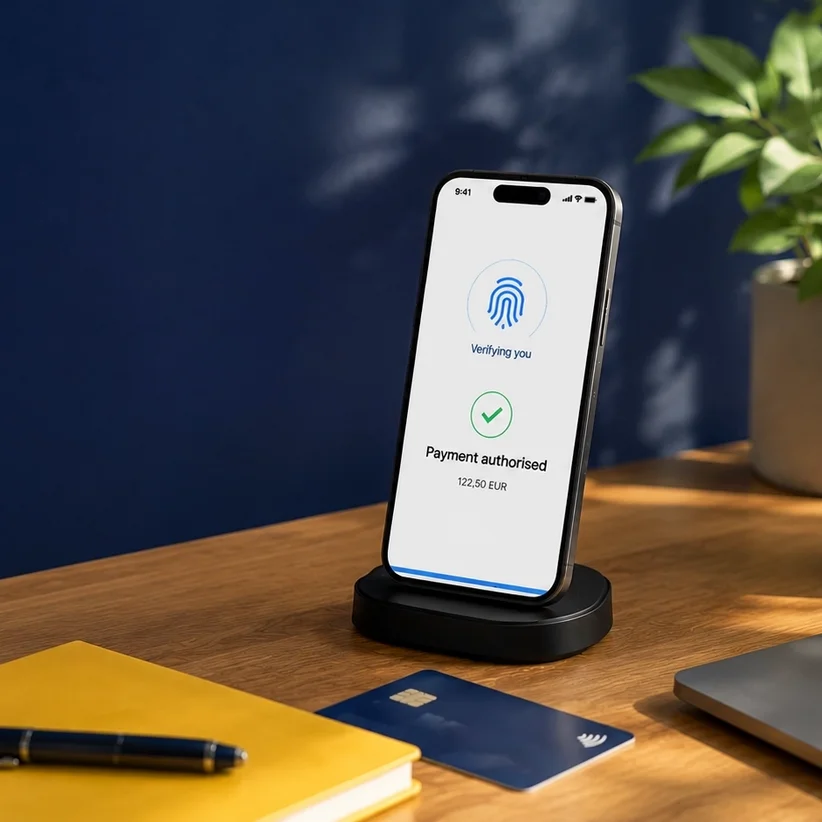
Handles in-app authentication, keeps the security layer inside the app rather than redirecting to a browser. Works alongside CtP for mobile-first checkout flows.


Payment tokenization as prerequisite in e-commerce

First-party misuse is now the world’s leading type of fraud, yet it is almost impossible to spot at checkout. Discover why friendly fraud is rising, what it costs the payments industry, and how better data sharing could help distinguish genuine disputes from deliberate abuse.

G+D Netcetera wins two Juniper Awards 2026 for fraud prevention and digital wallets, as banks rethink their systems landscape for future payments

3DS and SCA are working as designed. So why is UK payment fraud still rising?

This free on-demand webinar with G+D Netcetera and The Payments Association UK explores why 3DS alone is no longer enough, and how banks can use earlier intervention, cross-channel intelligence and secure data sharing to make fraud prevention more proactive.

G+D Netcetera Becomes an Official AWS Partner, Strengthening Cloud-Based 3DS Solutions
Your Essential Introduction to Passwordless Authentication. Tired of password resets, phishing attacks, and frustrated customers? It's time to discover passkeys—the authentication technology that's making passwords obsolete.

Payment trends for 2026: digital identity wallets, network tokenisation, AI fraud prevention, VRPs, embedded finance and payment orchestration.
In our latest podcast episode, payment network expert Michael Schoch explains how Secure Remote Commerce (SRC) is creating new growth opportunities for domestic card networks.
This Tech Tribe episode gives a rare look into how advanced fraud prevention works when every second counts — and how the right expertise can turn a crisis into a controlled situation.

CEO Carsten Wengel sits down with Martina Forster, Portfolio Owner for Secure Digital Payments at G+D Netcetera, to explore the evolving world of digital payments: from 3-D Secure to instant payments, Big Tech, and digital identity.
Protecting the business and customers from invisible threats
Make Instant Payments a success with G+D Netcetera, as your strategic partner
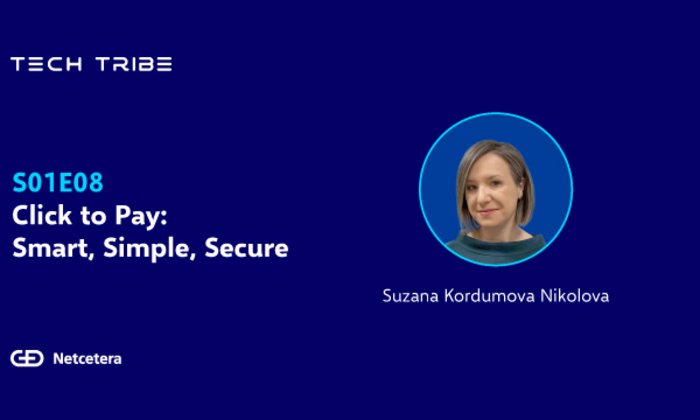
Remember the last time you abandoned a purchase because you couldn’t find your card? How much time, energy, and mood did you waste filling in the requested information? Ultimately, you just left your purchase because it was too time-consuming, data-consuming, and energy-consuming. Sound familiar? That’s exactly why Click to Pay was created. In this episode with Suzana Kordumova Nikolova, we explore what makes Click to Pay different from Apple Pay and Google Pay, how it enhances security, and why businesses adopt it.
Passwords are becoming a thing of the past. Passkeys deliver a safer, faster, and more seamless way to log in and approve payments. Payment expert Nakjo Shishkov explains how passkeys, 3DS, Click to Pay, and FIDO authentication set new standards for secure digital experiences. Learn how passkeys work, why they improve security, and how they drive better user journeys and higher conversion rates.
Wach the Click to Pay webinar featuring G+D Netcetera, Worldline, and Visa experts.

Maximizing Trust and Efficiency: G+D Netcetera expands ISAE 3402 certification to cloud services